



The Regal Architecture of Beef Wellington: A Culinary Icon
In the hierarchy of classic British cuisine, Beef Wellington stands as a monumental achievement of flavor and technique. Often reserved for the most festive of occasions—holidays, anniversaries, and grand celebrations—this dish is the ultimate test of a chef’s skill. As of 2026, it remains a beloved “show-stopper,” combining the rugged richness of prime beef with the delicate, buttery sophistication of French pastry. It is more than just a meal; it is a meticulously constructed architectural feat designed to be the centerpiece of the table.
The Anatomy of Excellence
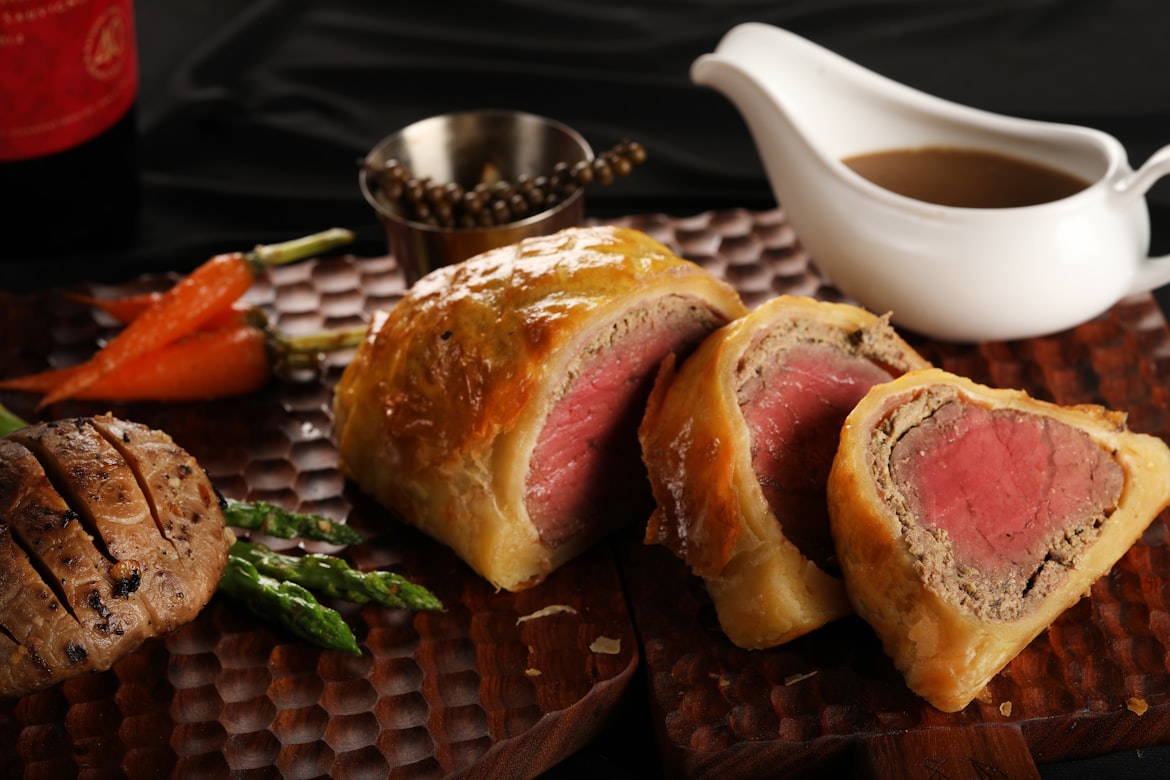
The beauty of a Beef Wellington lies in its complex layering, where each component serves a specific functional and flavorful purpose. At its core is the Chateaubriand, the center-cut of the beef tenderloin. Because this muscle is naturally lean and incredibly tender, it provides a succulent, “melt-in-your-mouth” foundation.
Surrounding the beef is the Mushroom Duxelles—a finely minced concentrate of mushrooms, shallots, and herbs sautéed until every drop of moisture has evaporated. This layer provides a deep, earthy umami that complements the beef. To prevent the pastry the new york deli from becoming soggy, modern culinary standards in 2026 emphasize the use of a “moisture barrier.” This is achieved by wrapping the beef and mushrooms in thin slices of salty prosciutto and, in the most refined versions, a delicate chive crepe. This ensures that the juices from the meat never reach the outer shell.
The Golden Shell
The final layer is a blanket of puff pastry, which is often decorated with an intricate lattice or scored with a sharp knife to create a beautiful pattern. After being brushed with an egg wash, the Wellington is baked until the pastry transforms into a flaky, golden-brown armor.
The challenge of the Beef Wellington is the timing. A perfect Wellington must achieve a crisp, fully-risen pastry on the outside while maintaining a precise medium-rare temperature of 130°F (54°C) at the very center of the beef. When sliced, the cross-section should reveal distinct, colorful rings: the golden crust, the pink prosciutto, the dark mushroom layer, and the vibrant red heart of the tenderloin.
A Legacy of Luxury
Historically associated with Arthur Wellesley, the 1st Duke of Wellington, the dish has transitioned from a 19th-century luxury into a global icon of high-end dining. It is almost always served with a rich Red Wine Jus or a Madeira sauce to further enhance the savory notes of the beef.
In a world of fast-moving food trends, the Beef Wellington endures because it represents the pinnacle of craftsmanship. It requires patience, precision, and the highest quality ingredients, making every slice a celebration of culinary tradition.